


|
Quantity
|
Total
|
||
|
|
|||
|
|
|||
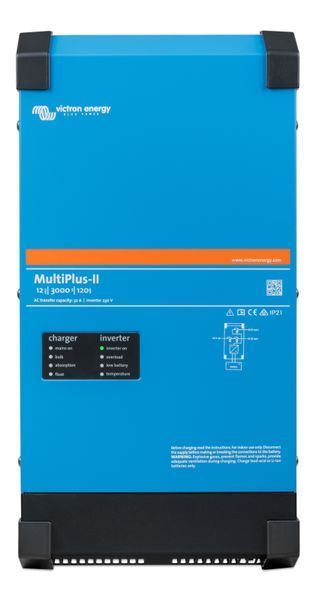
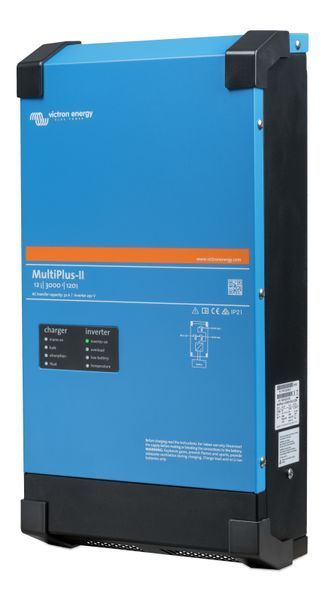
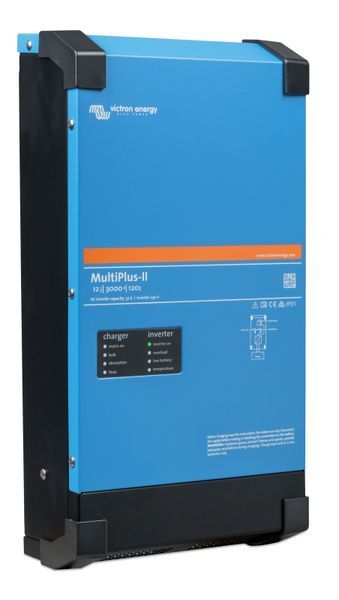
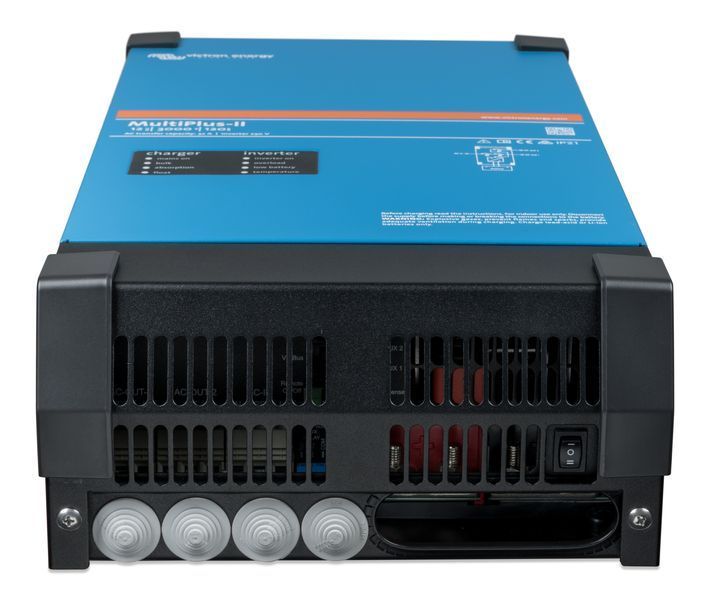
The hybrid inverter MultiPlus-II 12/3000/120-32 — is a multifunctional and intelligent new generation inverter-charger that combines in a single housing a 3000 VA (2400 W) inverter, a high-performance 12 V / 120 A charger, an automatic power source transfer switch of 32 A, as well as full functionality for working with modern energy storage and management systems (ESS).
This model is an optimal solution for solar, backup, and autonomous installations, where high reliability, scalability, and flexible control of energy flows play a decisive role.
Key advantages of the MultiPlus-II inverter
In most key parameters listed below, this device is ahead of competing offers from European manufacturers and significantly surpasses budget Asian analogues.
- Power: nominal – 3000 VA / 2400 W, peak – 5500 W.
- True 230 V ±2% sine wave – flawless operation of all sensitive electrical appliances, including medical equipment and boilers.
- Maximum efficiency up to 93% – highly efficient conversion with minimal losses over the entire load range.
- Ultra-low standby power consumption – only 3–13 W depending on the active mode (AES/Search), which significantly extends the autonomous operation time from the battery.
- Wide input voltage range (9.5–17 V) – full compatibility with LiFePO₄ 12 V batteries; easily configured for all known types of 12 V batteries, including AGM and GEL lead-acid.
- Temperature resistance: from –40°C to +65°C, active cooling with a thermally controlled fan that turns on as needed. The device is reliably operated in vehicles with large daily temperature differences, in outdoor cabinets, unheated rooms, attics, and other places with harsh operating conditions.
- Compatibility with all types of generators – gasoline, diesel, inverter, and gas units. The device has a wide range of tuning parameters for optimal joint operation with any type of generator. Automatic control of starting and stopping the generator based on battery charge conditions is supported.
- Two independent AC outputs – separate connection of critical and secondary loads. This is a fundamentally important function when using the MultiPlus-II 12/3000/120-32 as part of a solar power plant or hybrid power system.
- Additional options for advanced control and monitoring:
- Interface MK3-USB – configuration and programming of inverter parameters via PC.
- VE.Bus Smart Dongle – Bluetooth monitoring in real time.
- BMV-712/SmartShunt – highly precise control of the status and capacity of batteries.
- Cerbo GX/Ekrano GX – full system control with integration into the VRM cloud portal.
- VRM cloud platform – provides full control over the entire energy system 24/7. Set up PUSH notifications about power loss from the grid, a drop in battery charge to a critical level, auto-starting or stopping the generator — any event can serve as a trigger for an automated control scenario.
Technological features
Separation of critical and non-critical loads
- The first output – continuous: uninterruptedly powers all essential loads regardless of the state of the external grid. The second – functions exclusively in the presence of an external source (grid or generator). This solution allows you to rationally distribute the stored battery energy and significantly increases the autonomous operation time of critical equipment. This feature is a key difference between the MultiPlus-II 12/3000/120-32 and most competitors.
The difference between MultiPlus-II and MultiPlus
- MultiPlus-II supports the connection of an external 100 A current sensor, which provides more precise and flexible PowerAssist/PowerControl, as well as the ability to finely tune the algorithms of the ESS system. The classic MultiPlus series is distinguished by an increased safety margin and overload capacity of the power section.
Three-phase and parallel operation
- Up to 6 devices are connected in parallel or 3 per phase – optimal scaling for a residential building, commercial facility, or farm.
PowerControl / PowerAssist
- PowerControl – limits the current consumed from the generator or city grid, preventing their overload.
- PowerAssist — at the moment of peak consumption, it adds the power of the batteries, compensating for the lack of power from an external source.
Operation with solar systems
- MultiPlus-II easily integrates with MPPT charge controllers and grid inverters, forming hybrid and fully autonomous (off-grid) systems with a priority for self-consumption or emergency backup.
Remote control and monitoring
With the help of the Cerbo GX system controller and the VRM cloud portal, full remote control is available:
- SOC (state of charge) of the batteries
- Power supply of all connected loads
- Battery charging and solar panel generation
- Remote firmware updates and flexible changes to system settings
Victron ESS (Energy Saving System) – next-level intelligent energy storage
Victron ESS allows you to use solar generation as efficiently as possible and reduce dependence on the external grid:
- Self-consumption priority – reducing consumption from the external grid due to the maximum use of proprietary generation.
- Automatic backup – guaranteed power supply to critical loads during external power outages.
- Flexible charge and discharge logic – adaptation to current electricity tariffs, schedules, generator availability, and peak loads.
- Integration with grid inverters – smooth coordination with popular PV inverters from Fronius, Solis, SMA, and other manufacturers.
- Full visualization in VRM – analytics of consumption and generation, event log, e-mail alerts, and push notifications.
ESS significantly reduces electricity costs and protects consumers from scheduled and emergency outages. The system's algorithms adapt to individual consumption scenarios to achieve maximum energy independence.
LiFePO₄ support with data exchange – safety and precision
MultiPlus-II 12/3000/120-32 is fully compatible with lithium batteries, including LiFePO₄ with BMS via VE.Bus and/or VE.Can. Digital data exchange with batteries allows:
- Accurately determining the SOC (real state of charge) of the battery
- Preventing overcharging and deep discharge, keeping the battery within safe operating limits
- Automatically limiting the charge/discharge current or disconnecting loads upon reaching critical parameters
- Synchronizing the charging profile with the battery manufacturer's recommendations
- Recording all warnings and critical events in the log for subsequent analysis
- Extending the battery's warranty life by adhering to all recommended operating modes
This is critically important for the safety, durability, and stable operation of battery systems in modern energy installations.
Use cases
- ESS for solar power plants – maximum use of proprietary generation and reduction of electricity costs.
- Private houses and dachas – with battery backup, solar panels, and the application of night preferential tariffs.
- Commercial facilities — shops, service stations, offices – stable backup power for important devices.
- Mobile workshops and motorhomes – full energy autonomy anywhere on the route.
- Yachts and boats – powering refrigerators, navigation electronics, pumps, and lighting systems.
- Server rooms, video surveillance and security systems – guaranteed uninterrupted power supply in any situations.
Communication and monitoring interfaces
- VE.Bus – parallel and three-phase operation; connection to Cerbo GX and Ekrano GX system controllers.
- VE.Bus Smart Dongle – Bluetooth monitoring with transmission of battery temperature and voltage data.
- MK3-USB – configuration and programming of parameters via PC and the VEConfigure program.
- I/O inputs/outputs – a programmable relay for controlling the generator, emergency load disconnection, and implementing automated scenarios.